






Every first-time parent in India ends up standing in front of the same decision. The cot is ready, the hospital bag is half packed, and the shopping list says "baby clothes" without saying which kind. Do you buy zipsuits, or do you buy onesies? The answer matters more than it sounds, because these two garments behave very differently at 3am with a wet nappy and a baby who has finally fallen asleep.
At Bubz, we make organic bamboo babywear, and the two-way zip bamboo zipsuit is our most-bought piece. So we have a view. We have still written this comparison to be genuinely useful rather than one-sided, because both garments earn a place in a newborn wardrobe. This guide explains what each one is, how they compare on nappy changes, comfort, warmth and sleep safety, and how many of each you actually need in the first few months.
What Is a Baby Zipsuit?
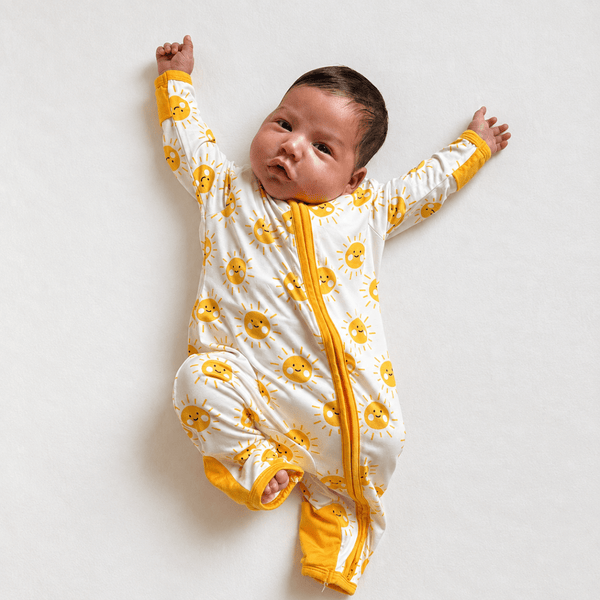
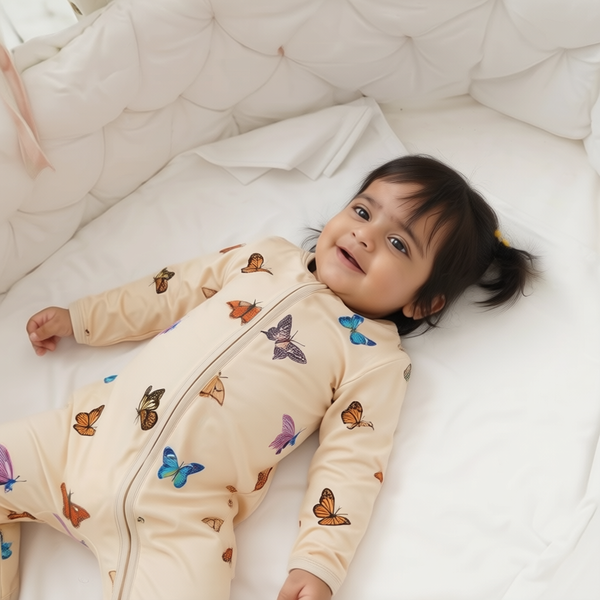
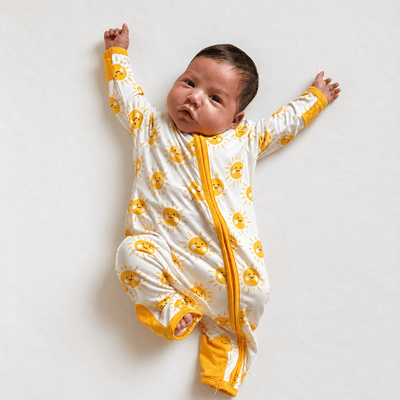
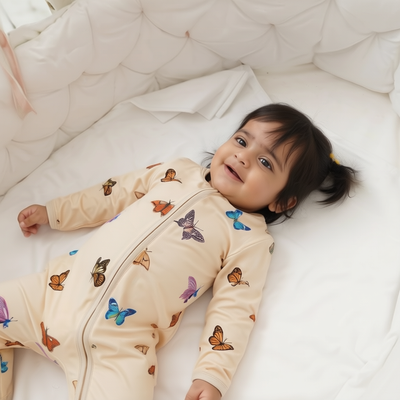
A baby zipsuit is a one-piece sleepsuit that closes with a zip instead of press studs. It covers the torso, arms and legs, and in newborn sizes it usually comes footed, with fold-over mittens at the cuffs. Think of it as the full-body outfit your baby lives in during the early weeks, day and night.
The detail that matters most is the type of zip. A one-way zip opens only from the neck down, which means undressing your baby completely for every nappy change. A two-way zip opens from the bottom up as well. You unzip only the lower half, change the nappy, and zip it back. Your baby's chest and arms stay covered and warm, and there is a decent chance they never fully wake up.
Good zipsuits also place a fabric flap behind the zip so the metal never touches skin, and a chin guard at the top so nothing catches under the neck. If you want a deeper look at the design thinking, our guide to the benefits of a zipsuit for young babies goes into it in detail.
What Is a Onesie, and How Is It Different?
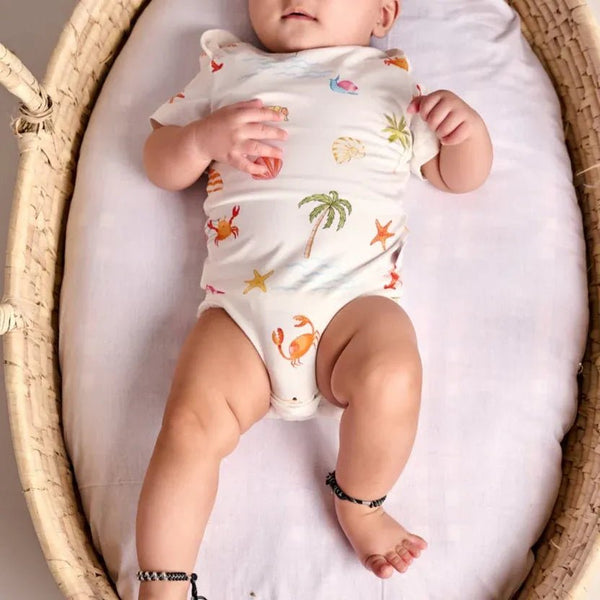
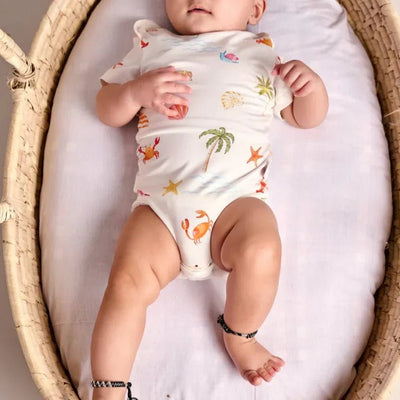
Here is where the vocabulary gets confusing, especially in India where American, British and Indian terms all circulate on the same shopping sites. A onesie, strictly speaking, is a bodysuit. It covers the torso, has short or long sleeves, and fastens with poppers between the legs. It has no legs and no feet. It is designed to be worn on its own in warm weather, or as a base layer under other clothes.
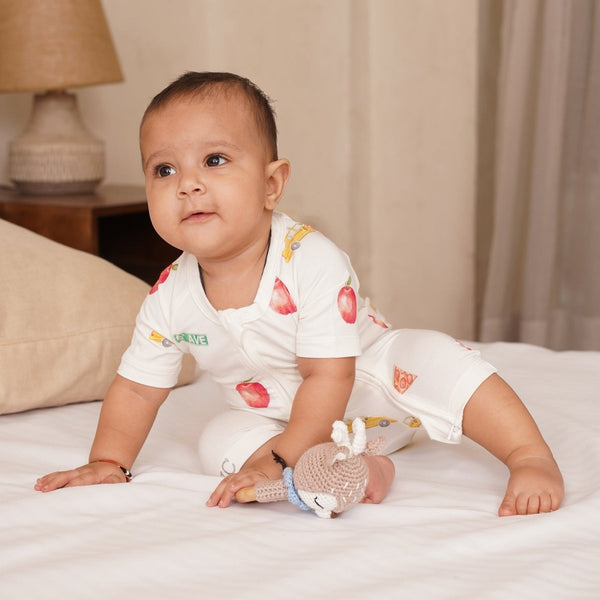
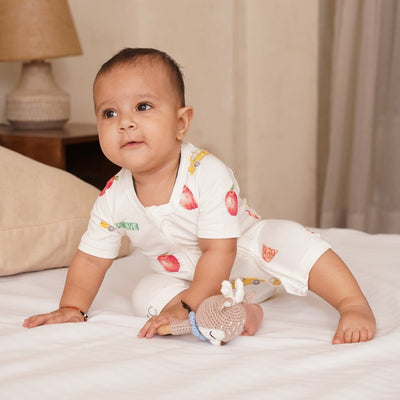
A romper is a related but different garment. It covers the torso and the legs, but usually stops at the ankle and has no feet. Zip rompers combine the romper cut with a zip closure, which is why so many parents search for "rompers with zip" when what they picture is a zipsuit.
So the honest comparison is not really zipsuit versus onesie as equals. It is a full-body sleepsuit versus a torso-only base layer. They solve different problems, and understanding that makes the buying decision much simpler.

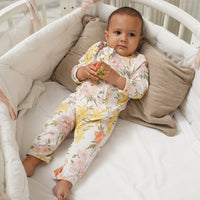
Blossoms Bamboo Bodysuit
Rs. 850
Baby Zipsuit vs Onesie: The Head-to-Head Comparison
|
Bamboo zipsuit |
Onesie / bodysuit |
|
|---|---|---|
|
Coverage |
Torso, arms, legs, usually feet |
Torso and arms only |
|
Closure |
Two-way zip |
Press studs at the crotch and shoulder |
|
Nappy change speed |
Fast, one motion |
Fast, but exposes the whole lower body |
|
Best for |
Overnight sleep, cool rooms, newborn weeks |
Hot afternoons, layering, summer daywear |
|
Night-waking risk |
Lower, baby stays covered |
Higher, more handling and exposure |
|
Typical price in India |
₹1,500 to ₹1,900 |
₹800 to ₹1,500 |
Nappy Changes at 3am
This is where a zipsuit earns its price. With a two-way zip you make one downward movement, deal with the nappy, and zip up again. With a popper-fastened onesie you are lining up six or eight studs in low light, often while your baby squirms. Parents consistently tell us this is the single difference they notice first.
Comfort Against Newborn Skin
A newborn's skin barrier is thinner and more permeable than an adult's, so friction and fabric chemistry matter. Bamboo fabric is smooth, moisture-wicking and naturally hypoallergenic, which is why it suits babies prone to eczema and heat rash. Both zipsuits and bodysuits benefit equally here. What matters is the fabric, not the closure. Look for OEKO-TEX Standard 100 certification at Product Class 1, which verifies the fabric has been tested against more than 300 harmful substances.
Warmth and Temperature Control
A zipsuit covers more of the body, so it holds warmth better in an air-conditioned bedroom or a Delhi winter. A onesie leaves the legs free, which is exactly what you want on a humid Chennai afternoon. In practice, Indian parents need both, and the seasons decide which one dominates the drawer.
Breathable bamboo helps in either format. The fibre wicks sweat away instead of trapping it, so your baby is less likely to overheat inside a full sleepsuit. Our guide to the best fabrics for baby sleep covers what to look for and what to avoid.
Safety for Sleep
Both are safe for overnight sleep when they fit properly and use breathable fabric. A well-made zipsuit has no loose buttons, cords or detachable parts, which is a genuine advantage over garments with decorative fastenings. Overheating is the risk to watch, so dress your baby in one light layer more than you are wearing yourself, and keep the room comfortably cool.
Layering and Versatility
Onesies win on flexibility. A short-sleeve bamboo bodysuit works alone in summer, under a co-ord set in monsoon, and under a zipsuit on a cold night. A zipsuit is a complete outfit and is rarely layered over anything. If you are building a small, hardworking wardrobe, bodysuits are the connective tissue between everything else.
Which Is Better for Newborns in India?
For the first three months, the zipsuit is the more practical daily garment. Newborns sleep in long, broken stretches, feed frequently, and go through several nappies a night. Anything that reduces handling during those hours is worth having. A footed bamboo zipsuit with integrated mittens also stops newborns scratching their own faces, which saves you a lot of small worries.
From around three to four months, the balance shifts. Babies become more alert, spend more waking hours out of the cot, and start rolling. That is when bodysuits and rompers become the workhorses of the wardrobe, with zipsuits reserved for nights and cooler days.
So the real answer is not one or the other. It is zipsuits for sleep and the newborn weeks, bodysuits and rompers for daytime and warm weather.
How Many Zipsuits Does a Newborn Need?
A practical starting point for the first three months is three to four zipsuits and five to six bodysuits. Babies go through two to three full changes a day once you account for spit-up and nappy leaks, and Indian drying times in monsoon are slower than you expect. Buy small quantities per size, because most babies move out of 0 to 3 months faster than parents plan for.
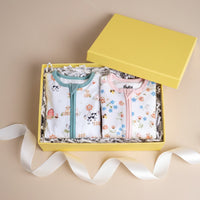
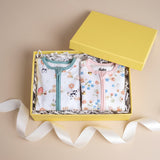
If you are shopping for someone else, a zipsuit paired with a bodysuit in the same size makes an excellent newborn gift. Our gifting bundles are built around exactly that pairing.
What to Look For When Buying a Bamboo Zipsuit
Check five things before you buy. First, confirm it is a two-way zip, not a one-way zip, because this is the whole point of the format. Second, look for OEKO-TEX Standard 100 certification and AZO-free dyes. Third, check the fabric weight and blend. A 95% bamboo and 5% elastane blend gives softness with enough stretch to survive daily wear.
Fourth, look for a zip flap and a chin guard so nothing presses against your baby's skin. Fifth, check the sizing range and the fit around the nappy area, since a cut that is too slim makes the whole garment harder to use.
Conclusion
The zipsuit versus onesie question really comes down to what part of the day you are dressing for. A two-way zip bamboo zipsuit is the better newborn sleepwear choice, because it makes night changes faster and keeps your baby covered and settled. A bamboo bodysuit is the better warm-weather and layering choice, and it stays useful long after the newborn stage ends.
Start with three or four zipsuits and five or six bodysuits, buy breathable certified fabric, and let the season decide the rest. Browse the Bubz bamboo zip suits collection for OEKO-TEX certified two-way zipsuits in sizes 0 to 24 months, made from soft 95% bamboo fabric with AZO-free dyes.
FAQ
1. Is a zipsuit or a onesie better for a newborn?
For the newborn weeks, a zipsuit is generally better. It covers the arms, legs and usually the feet, and a two-way zip lets you change a nappy without undressing your baby. A onesie or bodysuit is better for hot afternoons and for layering under other clothes. Most Indian parents need both, with zipsuits dominating nights and bodysuits dominating warm days.
2. Are zipsuits safe for newborn sleep?
Yes, when they use breathable fabric and have no loose parts. Look for a fabric flap behind the zip, a chin guard at the neck, and no detachable buttons or cords. Breathable bamboo helps prevent overheating, which is the main sleepwear risk to manage. Dress your baby in one light layer more than you are wearing and keep the room comfortably cool.
3 How many zipsuits does a newborn need in India?
Three to four zipsuits per size is a sensible starting point for 0 to 3 months, alongside five or six bodysuits. Babies need two to three changes a day once spit-up and nappy leaks are accounted for. Buy in small quantities per size, since babies outgrow the newborn size faster than most parents expect.
4. What is the difference between a romper, a onesie and a zipsuit?
A onesie or bodysuit covers the torso and arms and fastens with poppers at the crotch. A romper covers the torso and legs but usually has no feet. A zipsuit is a full one-piece sleepsuit with arms, legs and often feet, closed with a zip. Zip rompers sit between the two, using a zip on a romper cut.
5. Why choose a bamboo zipsuit over a cotton one in India?
Bamboo fabric is more breathable and moisture-wicking than standard cotton, so it stays cooler against the skin in humid Indian conditions. It is also naturally hypoallergenic, which suits babies with sensitive skin or eczema. Certified bamboo zipsuits with OEKO-TEX Standard 100 approval and AZO-free dyes are tested for prolonged skin contact, which matters for a garment worn overnight.
Sakshi Tiwari writes about bamboo baby clothing, infant care, and practical parenthood for Bubz India.